
October 13, 2026
The way businesses use power is changing.
Across industries, higher power densities, more sophisticated loads, tighter space constraints and faster deployment expectations are putting new demands on power infrastructure. AI is accelerating that shift, but the need for more flexible and efficient power systems extends far beyond any one application or market.
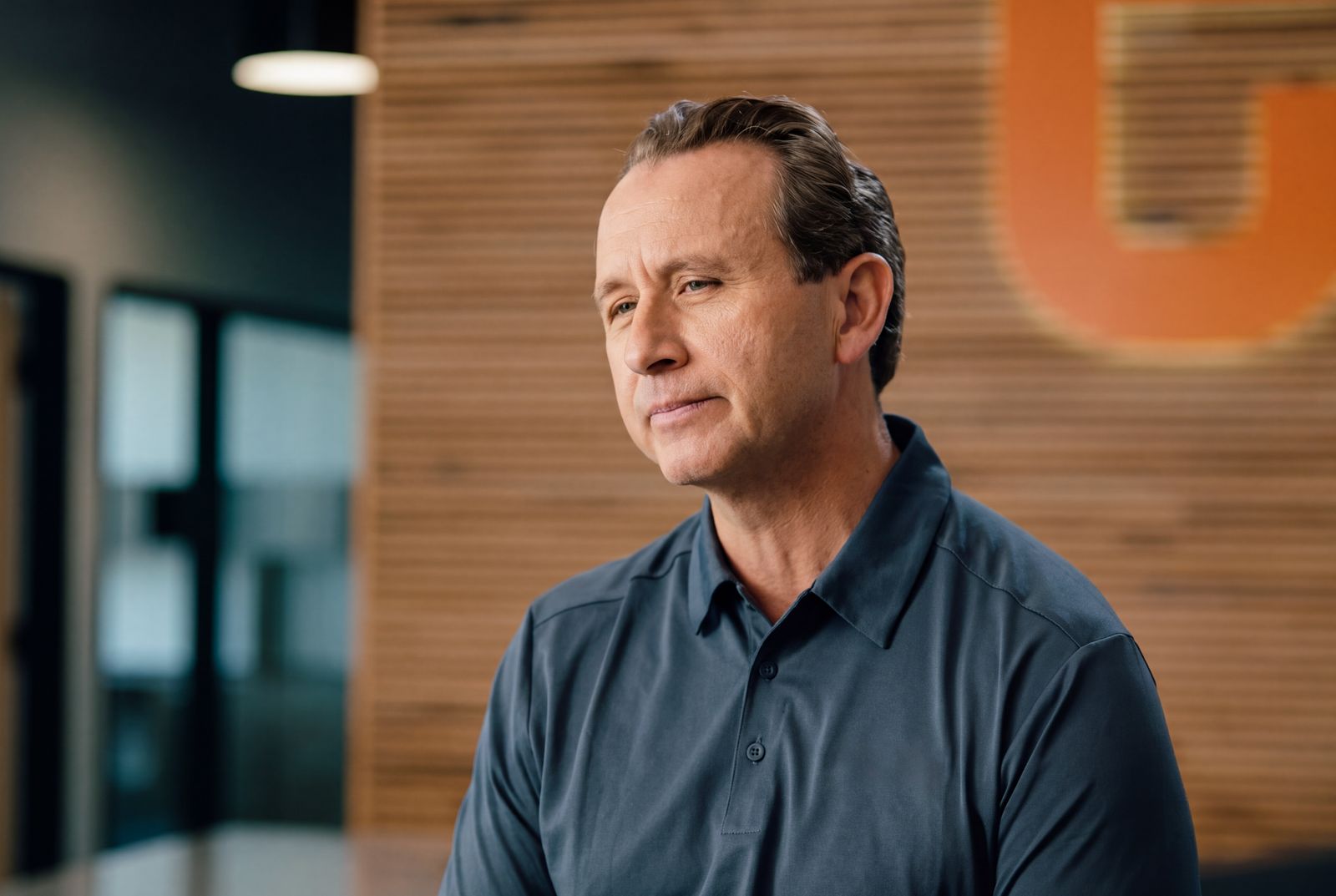
With more than two decades of experience in power systems, Accelevation CTO Matty Akhavan sees power as more than individual pieces of equipment. His approach considers the entire system, from design and manufacturing to installation, operation and expansion. That systems-level perspective allows us to design power systems that adapt to changing requirements and give customers flexibility as their needs evolve.
We sat down with Akhavan to talk about the changing demands on power infrastructure, why adaptability matters and how better questions lead to better engineering.
As demand for power accelerates, what do you think people underestimate about the infrastructure required to support it?
People underestimate how much work happens between “we need more power” and actually delivering reliable power to the load.
AI increases power density dramatically, but the challenge isn’t simply producing more megawatts. You have to distribute that power safely, manage heat, deal with space limitations, coordinate protection, maintain power quality and make the system serviceable.
Then there’s the supply chain and manufacturing side. You need transformers, switchgear, breakers, busway, PDUs, RPPs, cable assemblies and countless other components, and they all have to come together on a very aggressive schedule. The industry is moving toward higher density and faster deployment, so we have to rethink traditional approaches rather than simply making everything bigger.
When you look ahead, how do you see power systems evolving?
I think power distribution will become much more dynamic.
We’re going to see systems designed around the idea that loads aren’t necessarily static anymore. The amount of power a facility needs, where it needs it and how quickly it needs it can change significantly.
That means flexibility is going to become almost as important as capacity. I also think we’ll see more intelligence move closer to the distribution equipment itself, with better monitoring, diagnostics, predictive maintenance and real-time visibility into how power is being used.
And modularity will become much more important. Customers will want to deploy power infrastructure in stages rather than commit to a fixed architecture that may become obsolete. More power demand will create new constraints, and those constraints will drive innovation. To me, that’s where engineering gets interesting: designing something that doesn’t just solve today’s need but gives the customer room to evolve.
You’ve worked as a designer, consultant, integrator and now CTO. How has that shaped the way you approach engineering?
It’s given me a much broader perspective.
As a designer, I focused on technical solutions. As a consultant, I learned to understand the customer’s need. As an integrator, I learned that something that works on paper also has to be practical to build, install and maintain. Earlier in my career, I probably thought the best technical solution was automatically the best solution. Experience has taught me that the right solution balances technical performance with cost, manufacturability, installation, schedule, safety and serviceability.
Today, I look at the entire lifecycle. Engineering is ultimately about making the right tradeoffs.
Fearless Innovation is one of our core values, what does that actually look like to you?
Innovation usually isn’t one giant breakthrough. Most of the time, it’s the result of someone noticing that something doesn’t have to be as difficult as we’ve always made it. It starts with asking better questions.
Why do we build it this way? Why does installation take that long? Why does the customer have to do that step? Can we make this modular? Can we eliminate a component? Can we make it safer or easier to service?
Importantly, innovation requires collaboration, and that’s why we’re vertically integrated. The best ideas rarely come from engineering working in isolation. They come from engineering working with manufacturing, operations, sales, customers and suppliers.
Innovation happens when people are willing to challenge assumptions and then have the discipline to turn a good idea into something repeatable and reliable.
After 23 years solving power challenges, what still keeps you thinking?
How do we build power infrastructure that can keep up with the rate of change we’re seeing without sacrificing reliability, safety or maintainability?
We’re being asked to deliver more power, at higher densities, in less space, on shorter schedules, and the requirements can change while the project is already underway. There isn’t one piece of equipment that solves that. It’s really a systems question. We need better architectures, more modular products, better visibility into the system, smarter engineering tools and closer collaboration between the people designing, manufacturing, installing and operating the equipment.
That’s what excites me about this point in the industry. After 23 years, I don’t think we’ve reached the answer. I think we’re just getting to the point where we have the technology and the experience to ask much better questions.
✕